ENVIRONMENTAL EDUCATION PROGRAMMES & AWARENESS PDF  | Print |  E-mail

Since inception, Environmental Education has remained a major strategic approach of the Nigerian Conservation Foundation. With the main objective of promoting environmental education and awareness amongst all strata of the Nigerian society, NCF embraced three major thematic interventions to achieve the main objectives of environmental education.

They include a nationwide Schools Conservation Programme; Community based Education at NCF Project sites and Promotion of environmental learning through publications, education materials and environmentally related events and campaigns.
Highlights of events and activities of the Environmental Education Programme include World Wetland Day, World Environment Day, among others.

ACTIVITIES OF SCHOOL CONSERVATION CLUBS
Schools Programme (NCF conservation clubs) continued to be an effective tool in the promotion of environmental education in Nigeria. The results of its activities cannot be over emphasized.

Through this nationwide network of conservation clubs in schools, NCF has created awareness on environment and continue to sensitise young minds about humans’ relationship and responsibility to the environment.

School Outreach Programme
The school outreaches has been a way of promoting Environmental Education (EE) with the schools. It also serves as an avenue to promote EE within the school curriculum. Two schools were visited in Lagos and the event was very successful. The children were sensitized on the need to be involved and take care of the environment. The outreach resulted in the establishment of a new club.

UPDATE ON CLUBS
As at December 2009, NCF Conservation Club programme has a network of 1,143 clubs with 34,077 members. Membership of the clubs cut across primary, secondary and tertiary institutions. 22 new clubs joined the network of conservation clubs in 2009. The school clubs have been involved in various activities such as:

Tree planting exercises
Club members have been carrying out laudable projects in the course of the year. One of the Clubs, Lagos State Model College, Badore embarked on a tree planting initiative and was supported by the Coca-Cola Company through NCF. NCF also gave technical assistance with the implementation and monitoring of the tree planting initiative. One hundred and ten tree seedlings were planted within the school premises at the beginning of the project and till date 68 trees have survived.

The success rate can be attributed to the commitment of the club members, technical input from NCF and the consistent financial support from Coca Cola Nigeria. The conservation club members will continue to monitor the growth of the trees seedlings until they reach full maturity. The project has contributed to mitigating the effects of climate change and also promoted Environmental Education with the school.

Campaigns, lectures  and Walks.
Various clubs have also organised campaigns and talks to sensitize the communities about the need for a sustainable environment. Edo State Chapter is of notable mention where campaigns have given birth to the establishment of new clubs.

Conservation Clubs in Lagos State joined NCF annual “2009 Walk For Nature” campaign tagged “Celebrating a Greener Lagos”. The event was organized by NCF in partnership with the Lagos State Government.

NATURE’S ROOST PROJECT
Nature’s Roost is an electronic library established for the purpose of linking Nigerian club members to the global community especially as it relates to the environment. The establishment of the Library was supported by the Birdlife Africa Partnership under the Wildlife Clubs of Africa Project. The library was painted by CAPlc makers of Dulux paint as co-support to the project.


2011 World Wetlands Day (WWD) Celebration at Omo Forest Reserve on 9th February, 2011

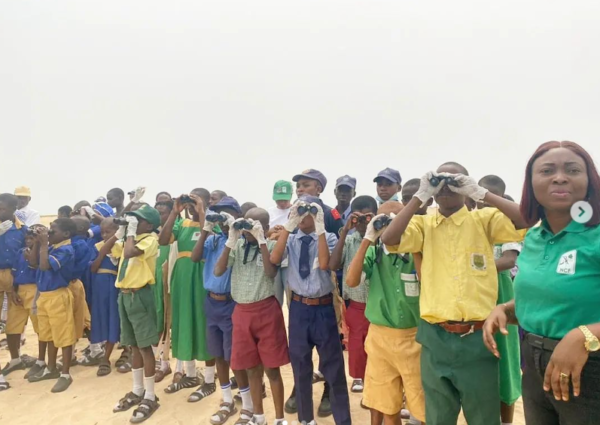
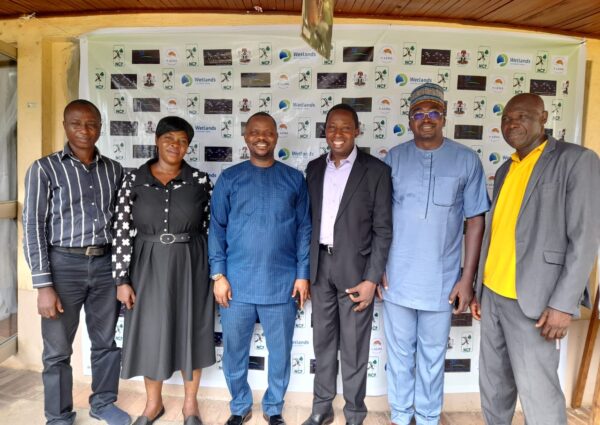
Omo Forest Conservation Club Memebers displaying their stickersStudents Coordinators of  Omo Forest Conservation Club in a group photograph with NCF Officialsin one of the Wetland site at Area J4

The Nigerian Conservation Foundation (NCF) through her strategy to further educate and sensitize the local community on the need to protect their wetlands ecosystem and its biodiversity which remain a vital component to sustain livelihood celebrated this year’s World Wetlands Day in one of NCF largest South-Western conservation project

in Nigeria-Omo-Oluwa-Shasha Forest Conservation Project. This was aimed at enhancing youth participation in creating environment awareness in their host community and to bring about the desired changes in people’s lifestyle in order to achieve sustainable development.


Highlights of the 2011 WWD Celebration

It was a moment of elevation in the minds of the conservation club members of Omo Forest Reserve as the Nigerian Conservation Foundation (NCF) joined the rest of the globe to commemorate the celebration of the 2011 World Wetlands Day at the Omo-Oluwa-Shasha Forest Conservation project, J4 Ogun State in form of Student Conservation Workshop (SCW).  This year’s celebration which as its theme as Forest for Water and Wetlands took place on 9th February, 2011 and marks 40 years of Ramsar Convention as a convention promoting the sustainable management and utilization of wetlands ecosystem around the world.

The workshop started at about 9:00 am with the national anthem recited by the attendees which was followed by an opening remark by the NCF EdOne of the wetland area in Omo Forest Reserve, Area J4ucation officer, Mr. Solomon Adefolu. This was followed by a goodwill message from the Head Teacher of Ogun State Plantation Primary School, Area J4, Mr. Adenaike who welcomed the gesture and appreciated the effort of NCF in involving Omo Forest Reserve in this year’s World Wetlands Day celebration.

Shortly after the goodwill message was a brief background to the Ramsar Convention and Wetlands Day celebration given by Mr. Solomon Adefolu. The Convention began as far back as 1971 in the Iranian City of Ramsar as an intergovernmental treaty whose mission is to promote the conservation and wise use of all Wetlands and their resources through local, regional and national actions and international cooperation as a contribution towards achieving sustainable development throughout the world. However, it came into force in 1975 and is the only global environmental treaty that deals with a particular ecosystem. The WWD has been celebrated in Biodiversity Action Plan (BAP) project Edo State, Hadejia Nguru Wetlands, Yobe State and in Badore Community, Lagos State where effort have been geared to promote the conservation and wise use of wetlands and as well instill in the public the benefits of wetlands to human well-being. Nigeria has eleven (11) Ramsar site with the first been the Hadejia-Nguru Wetlands in Yobe State and Adamawa state.

Mr. Ademola Lawal, the Omo Forest Environmental Education officer gave a brief report on the past and on-going activities of the conservation club in the community. In his brief, he spell out the successes recorded by the club in terms of promoting environmental awareness in the community which has contributed to reduction in percentage of logging and deforestation in the area. He however reiterated the challenges facing the club one of which he attributed to low finance and therefore stressed the need for an adequately funded environmental education programme.

The highpoint of the workshop was a lecture presentation on ‘Forest for Water and Wetlands’ delivered by the Lekki Conservation Centre Coordinator, Mr Adetayo Okunlola. In his lecture, he described forest as a vital component to maintain any ecosystem integrity especially as it concern the wetlands ecosystem as wetlands are temporary or permanent wet places such as lakes, swamps, rivers, peatlands, marshes, mangrove forest, beaches and coral reefs. He further explains the importance of wetlands as a valuable store of biodiversity and tourist attractions which provide us with a vast range of products (food, fibre, building materials, fish and water) and services such as climate change mitigation & adaptation, enhancement of sediment & nutrient retention, flood control, water purification, groundwater replenishment, cultural values amongst others. He attributed the loss of vital Wetland resources in Nigeria to continuous increase in population size interfering with land use, unsustainable harvesting of timber and deforestation, farming pressure resulting from damming, pollution, climate change and so many other man-made threats.

The presentation was followed by a question and answer section where certain issues were discussed and comments/ suggestions were entertained. A vote of thanks was delivered by Mr. Ademola Lawal who appreciated NCF for deeming it fit to organize such an educative workshop at Omo Forest Reserve. The workshop had about 90 people in attendance including the school conservation club coordinators, Head Teachers, Principals and community youth members.

Thereafter, the students visited a wetland section of the forest reserve called the ‘Guest house wetlands’ where they had practical demonstration of the role of forest to provide access to quality water and enhance wetlands ecosystem.

NCF is very grateful for the support and generous donation from DYS Trocca Valsesia & Co. Ltd (DTV) which has made this year World Wetlands Day celebration a possibility.

Supported by


Latest Updates: *** All Schools planning to visit the Lekki Conservation Centre (LCC), should send in notification letters not later than one month before the intended date of visit. For School visit, please call the the phone number 07028469598 or email us at education@ncfnigeria.org ***The Lekki Conservation Centre is opened to visitors from 8.30am to 5pm daily (Mondays - Sundays), including public holidays.There is NO entrance and visit into the Nature Reserve after 5.00pm. For further inquiries please call 08023836168 *** For copies of our latest publications and how to get your copies, kindly email the media@ncfnigeria.org *** You can now follow us @ncfmedia on twitter. ***

Support NCF

You can support conservation work by donating to NCF Appeal Fund Account available at all United Bank for Africa UBA Branches in Nigeria. Account Name: UBAT/NCF Account No: 03460300001175, First Bank of Nigeria Branches, Account No: 2402010005944, and all Ecobank Plc Branches, Account No: 0022076310. Account Name: Nigerian conservation Foundation.      

NAVIGATE NCF

Species Conservation

Visitors Counter

mod_vvisit_countermod_vvisit_countermod_vvisit_countermod_vvisit_countermod_vvisit_countermod_vvisit_counter
mod_vvisit_counterToday1292
mod_vvisit_counterThis week5678
mod_vvisit_counterThis month28911
mod_vvisit_counterAll731430

We have: 30 guests online

NCF PARTNERS AND DONORS


kız oyunları rock müzik meb oyunları steersman shavzy haberler antalya iş elbiseleri